
What is the New York LLC Transparency Act?

IMPORTANT UPDATE: Please refer to our most recent post for the newest information on the New York LLC Transparency Act HERE.


Let’s cut to the chase. Before diving into the details, here’s what you need to know now:
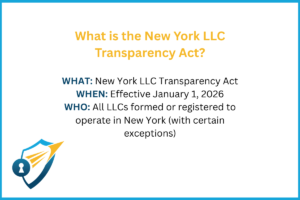
Now, let’s explore the nitty-gritty details, as they are crucial if you or your clients belong to the “Who” category mentioned above.

What is the New York LLC Transparency Act, Really?

The New York LLC Transparency Act (NYLTA), effective January 1, 2026, establishes state-level beneficial ownership reporting requirements that mirror many aspects of the federal Corporate Transparency Act, imposing new disclosure requirements on LLCs formed or registered to operate in New York.

Filing Deadlines

For existing LLCs (formed or authorized before January 1, 2026), the initial BOI report or attestation of exemption must be filed by January 1, 2027.

For new LLCs (formed or authorized on or after January 1, 2026), the filing must be submitted within 30 days of formation or registration.

After the initial filing, all LLCs must submit an annual statement confirming or updating their beneficial ownership information, principal executive office address, and exemption status.

Who Has to Report?

Any individual (considered a “beneficial owner”) who meets either of these criteria:

  • Owns or controls at least 25% or more of the LLC’s ownership interests

  • Exercises substantial control over the LLC

The law applies to all LLCs except those that qualify for one of 23 exemptions that mirror the federal Corporate Transparency Act.

A few key exemptions include large operating companies (with more than 20 full-time U.S. employees, gross receipts of $5 million or more, and a physical office in New York), publicly traded companies, banks and credit unions, tax-exempt entities, and investment companies.

Important Note: Even exempt LLCs must file an annual attestation of exemption under penalty of perjury indicating which exemption applies. In other words, every LLC has to file something.

new york llc transparency act

What Information is Required?

Each beneficial owner must provide:​

  • Full legal name

  • Date of birth

  • Current home or business street address

  • A unique identifying number from an acceptable ID (U.S. driver’s license or passport)

What Are the Penalties for Non-Compliance?

Similar to FinCEN’s former federal reporting requirements, the consequences for failing to file or update your NY reports/ attestations of exemption are steep, increasing in intensity as time goes on. ​

After 30 Days: Entity is marked “past due” in state records.

After 2 Years: Entity is given a “delinquency” status in state records; requires filing a corrected report plus a $250 penalty to remove the status, along with daily fines.

Ongoing Penalties: Up to $500 per day for failure to file or update. In extreme cases of non-compliance, the Attorney General may suspend or even dissolve the LLC.

How is the New York LLC Transparency Act Different From the CTA?

The NY LLCTA has a few important distinctions:

  • Annual statement requirement: All New York LLCs (exempt or not) must file an annual statement to confirm or amend information submitted previously.

  • Private database: Information is maintained confidentially by the New York Department of State, not publicly accessible.

  • Applicant information: The NYLTA only requires beneficial owner information, not company applicant information.

  • No FinCEN ID equivalent: Unlike the CTA, beneficial owners and applicants will be required to submit their personal information.

How Can LLCs File?

All BOI reports and attestations of exemption must be filed electronically with the New York Department of State in the form and manner they prescribe.​

What Can LLCs Do Now?

Stay on top of updates! One great way to do this is by following Secure Compliance on LinkedIn or bookmarking our website on your browser. We’re staying informed as policies are developed, and our content will be regularly updated to share what we’ve learned.

Is Building a DIY Entity Management Solution Worth It?

As businesses grow and expand into multiple jurisdictions, managing legal entities becomes increasingly complex. This complexity often leads companies to consider building their own entity management solution to address their unique needs. While the idea of a custom-built system may seem appealing, it’s important to weigh the potential benefits against the costs and challenges involved.

Could developing a DIY entity management solution be a mistake?

diy entity management system - secure compliance

In this blog, we’ll explore the risks, hidden costs, and challenges of creating an in-house entity management system.

The Hidden Costs of DIY Entity Management Solutions

At first glance, developing a custom entity management solution might seem like a cost-effective way to address business-specific needs. However, the costs of building and maintaining such a system can quickly spiral beyond initial estimates.

1. High Development and Maintenance Costs

Building software in-house requires substantial investment in software development, infrastructure, and IT resources. Hiring developers or diverting internal teams to build a custom solution can cost tens or even hundreds of thousands of dollars. Beyond the initial build, the system will need continuous updates, bug fixes, and security patches to keep up with evolving compliance regulations.

2. Security Risks and Data Protection

Entity management involves handling sensitive corporate information, including ownership details, legal documents, and compliance records. Developing a secure system that protects against cyber threats and complies with data privacy laws (e.g., GDPR, CCPA) requires extensive cybersecurity expertise. A custom-built system might lack the advanced security features that professional solutions provide, leaving your business vulnerable to data breaches.

3. Compliance Challenges

Regulatory requirements for managing legal entities vary by jurisdiction and are constantly evolving. A DIY solution must be designed to adapt to changing compliance obligations, which can be difficult without specialized legal and compliance knowledge. Missing a critical compliance update can result in regulatory penalties, reputational damage, and loss of business.

4. Limited Scalability and Flexibility

As your company grows, so will your entity management needs. A homegrown solution may struggle to scale effectively, requiring costly system overhauls or manual workarounds to accommodate new entities or jurisdictions. In contrast, professional software is designed with scalability in mind, offering flexible solutions that evolve with your business.

5. Resource Diversion

Developing and maintaining an internal system diverts critical resources from your company’s core business functions. IT teams that could focus on driving business innovation or improving operations are instead tied up managing an in-house solution. This opportunity cost can slow business growth and innovation.

The Advantages of Professional Entity Management Software

Professional entity management platforms are designed to address the unique challenges of managing legal entities efficiently and securely. Here’s why investing in a professional solution could be a smarter choice:

1. Automation and Efficiency

Professional software automates repetitive tasks like document filing, compliance tracking, and report generation. Automation reduces manual work, minimizes human error, and frees up your team to focus on more strategic initiatives.

2. Built-In Compliance Support

Professional solutions are regularly updated to reflect changing regulatory requirements. This means you can stay ahead of compliance deadlines and avoid costly penalties without dedicating internal resources to constant monitoring.

3. Advanced Security Measures

Top-tier entity management solutions prioritize data security with features like encryption, role-based access controls, and compliance with global data protection laws. These built-in safeguards ensure sensitive corporate data is secure and protected against cyber threats.

4. Scalability and Flexibility

Professional platforms are designed to scale with your business. Whether you’re managing a few entities or expanding into multiple jurisdictions, these solutions offer customizable tools and workflows that adapt to your needs.

5. Cost-Effectiveness

While professional software involves a subscription or licensing fee, it eliminates the hidden costs associated with development, maintenance, and compliance risk. This predictable pricing model allows for better budgeting and long-term cost savings.

6. Expert Support and Updates

Professional solutions come with dedicated support teams and regular updates, ensuring that your system is always running smoothly and in line with current regulations. This reduces downtime and eliminates the need for costly in-house support.

Is a DIY Solution Worth the Risk?

When considering whether to build or buy an entity management solution, it’s essential to evaluate the long-term impact on your business. The financial and operational risks of developing a DIY system often outweigh the perceived benefits.

Professional solutions are purpose-built to help businesses manage legal entities efficiently and securely. They provide advanced features, built-in compliance tools, and expert support—saving you time, reducing risk, and lowering long-term costs.

Final Thoughts

Managing legal entities is a critical component of business success, and the tools you choose can make all the difference. While building a custom entity management system may seem like a tailored solution, it carries significant financial, security, and operational risks.

Investing in a professional solution, such as Secure Compliance’s entity and document management platform, offers the automation, security, and scalability your business needs to stay compliant and focused on growth.

Don’t let a DIY system become a costly mistake—choose a solution that evolves with your business and keeps you ahead of compliance challenges.

Ready to simplify your entity management?

Dig deeper into how Secure Compliance can help streamline your entity management processes today!

Can Automation in Document Management Save You Money?

In today’s fast-paced business environment, manually managing documents is time-consuming and, at times, fallible. For organizations handling large volumes of documentation, inefficiencies in document management can lead to unnecessary costs, compliance risks, and reduced productivity.

The good news? Automated document management provides a solution that saves time and, often, significantly reduces expenses. This blog explores how automation in document management can be revolutionary – streamlining operations and contributing to a healthier bottom line.

The Cost of Manual Document Management

Before diving into the benefits of automation, it’s essential to understand the hidden costs of manual processes:

  1. Labor Costs: Employees spend hours on tasks like filing, retrieving, and organizing documents, which could be allocated to more strategic activities.

  2. Errors and Rework: Mistakes in documentation can lead to penalties, missed deadlines, and even reputational damage.

  3. Storage Costs: Physical storage and inefficient digital storage systems can add up over time, especially for businesses with extensive documentation needs.

Manual systems may seem manageable initially, but as your business grows, so do the inefficiencies and associated costs.

automation in document management - secure compliance

How Automation Saves You Money

Automation streamlines document management by leveraging technology to perform repetitive tasks, reducing the burden on employees and minimizing errors. Here’s how it directly impacts your bottom line:

1. Reduced Labor Costs

Automated systems handle tasks like document classification, data entry, and filing, eliminating the need for manual intervention. This allows employees to focus on high-value work, improving overall productivity.

2. Minimized Errors and Penalties

With automated systems, the risk of human error is significantly reduced. For example, advanced document management software can automatically validate data, flag inconsistencies, and ensure compliance with regulatory standards. This helps avoid costly penalties and rework.

3. Efficient Storage Solutions

Automation often comes with cloud-based storage capabilities, reducing the need for physical storage and enabling efficient digital organization. Centralized access to documents also eliminates time wasted searching for files, saving money in the long run.

4. Scalability Without Extra Costs

As your business grows, manual document management processes often require additional staff and resources. Automated systems, however, can scale effortlessly, accommodating increased workloads without additional costs.

5. Faster Processing Times

Automation accelerates document workflows, from approvals to report generation, ensuring that operations continue without delays. Faster processing times mean quicker responses to client needs, enhancing customer satisfaction and retention.

The Long-Term Benefits of Automation

Investing in document management automation isn’t just about saving money today; it’s about positioning your organization for long-term success. Automation fosters a culture of efficiency, enables better decision-making through accessible data, and reduces stress on your workforce.

As we step into 2025, embracing technology in document management is no longer optional—it’s a necessity for staying competitive.

Final Thoughts…

Can automation in document management save you money? The answer is a resounding yes. From reducing labor costs to minimizing errors and scaling seamlessly, automation offers a wealth of benefits for businesses of all sizes.

If you’re ready to take your document management processes to the next level, Secure Compliance’s cutting-edge solution is here to help. Contact us today to learn more about how we can save you time, money, and effort with our innovative automation tools.

Entity Management Best Practices Guide

A Comprehensive Guide to Streamlining Compliance and Reducing Risk

As businesses expand and diversify, managing legal entities across multiple jurisdictions becomes increasingly complex. Each entity must comply with local regulations, meet tax obligations, and maintain proper governance. Without a strategic approach, companies risk non-compliance, inefficiencies, and legal exposure. 

entity management best practices

This whitepaper serves as a comprehensive guide to best practices in entity management. It offers actionable insights on how to streamline operations, mitigate risks, and maintain regulatory compliance through strategic processes and technology. 

Why Effective Entity Management Matters

Legal entities are the foundation of any business’s structure. Whether subsidiaries, joint ventures, or holding companies, each entity must operate within specific legal, financial, and compliance frameworks. Ineffective entity management can lead to: 

  • Regulatory Penalties: Non-compliance with filing requirements, tax laws, and governance regulations can result in significant fines. 
  • Operational Inefficiencies: Disorganized documentation and manual processes slow down decision-making and hinder growth. 
  • Reputational Damage: Compliance failures can harm a company’s reputation, affecting investor trust and customer relationships. 
  • Increased Legal Risk: Poor governance exposes businesses to litigation, financial loss, and potential closure.  

Key Challenges in Entity Management

Managing legal entities involves several challenges, especially for businesses operating in multiple jurisdictions: 

  1. Diverse Regulatory Requirements: Each region has unique compliance laws and reporting obligations. 
  2. Complex Ownership Structures: Managing intercompany relationships and ownership stakes is complicated without clear visibility. 
  3. Data Inconsistency: Inaccurate or fragmented data leads to errors in compliance reporting and governance. 
  4. Manual Processes: Relying on spreadsheets and emails increases the risk of missed deadlines and human error. 
  5. Limited Oversight: A lack of centralized oversight makes it difficult to manage entity performance and compliance. 

Entity Management Best Practices

1. Centralize Entity Data 

A centralized data repository ensures that all entity-related documents and information are easily accessible. This includes articles of incorporation, bylaws, tax filings, and compliance records. 

Benefits: 

  • Streamlines document retrieval for audits and reporting. 
  • Reduces data duplication and errors. 
  • Improves collaboration across departments.

2. Standardize Compliance Processes 

Develop consistent procedures for compliance across all jurisdictions. This includes standardizing filing deadlines, document templates, and approval workflows. 

Benefits: 

  • Reduces the risk of missed deadlines. 
  • Simplifies employee training and onboarding. 
  • Enhances regulatory consistency.

3. Leverage Automation 

Implement automation tools for routine tasks such as compliance tracking, filing reminders, and document generation. 

Benefits: 

  • Minimizes human error. 
  • Frees up internal resources for strategic initiatives. 
  • Ensures timely filings and compliance adherence.

4. Implement Governance Frameworks 

Establish clear governance policies for managing entities, including decision-making hierarchies and internal controls. 

Benefits: 

  • Enhances accountability across departments. 
  • Improves risk management. 
  • Facilitates regulatory compliance.

5. Conduct Regular Compliance Audits 

Periodic audits help identify compliance gaps and potential risks. Proactive auditing reduces exposure to regulatory penalties. 

Benefits: 

  • Detects issues before they escalate. 
  • Strengthens internal controls. 
  • Demonstrates compliance to regulators and stakeholders.

6. Maintain Accurate and Real-Time Data 

Ensure entity data is accurate, updated, and synchronized across all systems. Implement real-time monitoring of compliance metrics. 

Benefits: 

  • Increases transparency. 
  • Reduces reporting errors. 
  • Supports informed decision-making.

7. Adopt Scalable Technology Solutions 

Use entity management software that scales with business growth. Cloud-based platforms provide flexibility and accessibility. 

Benefits: 

  • Supports global expansion. 
  • Simplifies the management of multiple entities. 
  • Provides secure, anytime access to critical data. 

The Cost of Ineffective Entity Management

Failing to implement best practices in entity management can result in significant costs: 

  • Regulatory Fines: Penalties for non-compliance can range from thousands to millions of dollars. 
  • Operational Delays: Inefficient processes slow down market expansion and decision-making. 
  • Legal Liability: Poor governance increases exposure to lawsuits and reputational damage. 

Conclusion

Effective entity management is critical for business success, especially in today’s global market. By centralizing data, standardizing processes, leveraging automation, and adopting scalable technology, businesses can minimize risk and ensure compliance. 

Secure Compliance’s innovative entity management solutions provide the tools needed to navigate complex regulatory landscapes and support sustainable growth. Discover how Secure Compliance can streamline your entity management strategy. Contact us today to learn more. 

Update: FinCEN’s New Interim Rule on the Corporate Transparency Act

On Friday, March 21, 2025, the U.S. Department of the Treasury and FinCEN introduced an interim final rule that significantly alters the enforcement of the Corporate Transparency Act (CTA). This rule narrows the scope of the Beneficial Ownership Information (BOI) reporting requirements, with a primary focus on foreign entities and their foreign beneficial owners.

fincen update

For Business Owners: What You Need to Know

Under the interim rule, U.S. citizens and domestic reporting companies are no longer required to report BOI to FinCEN. It focuses enforcement on foreign entities and their foreign beneficial owners, who are still required to file BOI Reports to FinCEN. These entities must comply by the new deadline of April 20, 2025. 

For U.S.-originated businesses, this interim rule provides immediate relief from reporting obligations. However, it’s important to understand that while U.S. businesses are exempt from reporting under this interim rule, the CTA’s legal framework remains intact. Future reporting rules may reinstate the requirement for U.S. entities or citizens to disclose BOI. Therefore, it’s essential not to disregard the CTA for good, as future rules may change.

For Practitioners: How This Affects Your Practice and Clients

As a practitioner, this interim rule may provide relief by removing potentially labor-intensive tasks from your plate. However, it remains prudent to stay informed about the CTA. Even if many of your clients are domestic entities or U.S. citizens, future reporting obligations may require U.S. entities to file reports. 

Looking Ahead

With the final rule still under development, businesses and practitioners should stay informed about potential changes, as the long-term enforcement of the CTA remains fluid, adapting to shifting political climates.

We will continue to monitor these developments and provide timely updates to help you and your clients stay compliant. 

Corporate Transparency Act Enforcement Delayed and Rule To Be Altered

In a recent update on March 2, 2025, the U.S. Department of the Treasury expanded on FinCEN’s recent decision to halt enforcement of the Corporate Transparency Act (CTA). Over the past few weeks, there have been numerous updates regarding the CTA, and this latest announcement might be the most significant yet.

The department not only reaffirmed that penalties or fines will not be imposed until a new reporting rule is released but also stated that “no penalties or fines will be imposed on U.S. citizens, domestic reporting companies, or their beneficial owners once the forthcoming rule changes take effect.” The Treasury’s press release revealed that the new reporting rule will only target foreign reporting companies. 

fincen delays enforcement - secure compliance

Practical Implications

For now, the CTA is effectively on hold again. Although a new reporting rule is expected to be announced and finalized this year, it remains unclear how enforcement of that rule will be implemented. 

It’s important to also note the legal status of the CTA. If courts uphold its constitutionality and Congress does not repeal the law, the CTA will technically remain in effect, even if it isn’t actively enforced. A shift in policy, a change of administration, or changes in enforcement priorities could lead to renewed enforcement of the CTA and its reporting requirements against U.S. citizens and domestic reporting companies. 

Looking Ahead

Given the political uncertainty under the new administration, the future of CTA enforcement remains unclear. Shifts in policy or changes in enforcement priorities could lead to renewed focus on the CTA. While professionals and companies should stay informed as the situation evolves, they may not need to pay as close attention as they have in recent months.  

You can read the full press release from the Department of the Treasury here